Examining Data Alignment Techniques to Reduce Discrepancies in Cross-Border Vendor Account Reconciliations
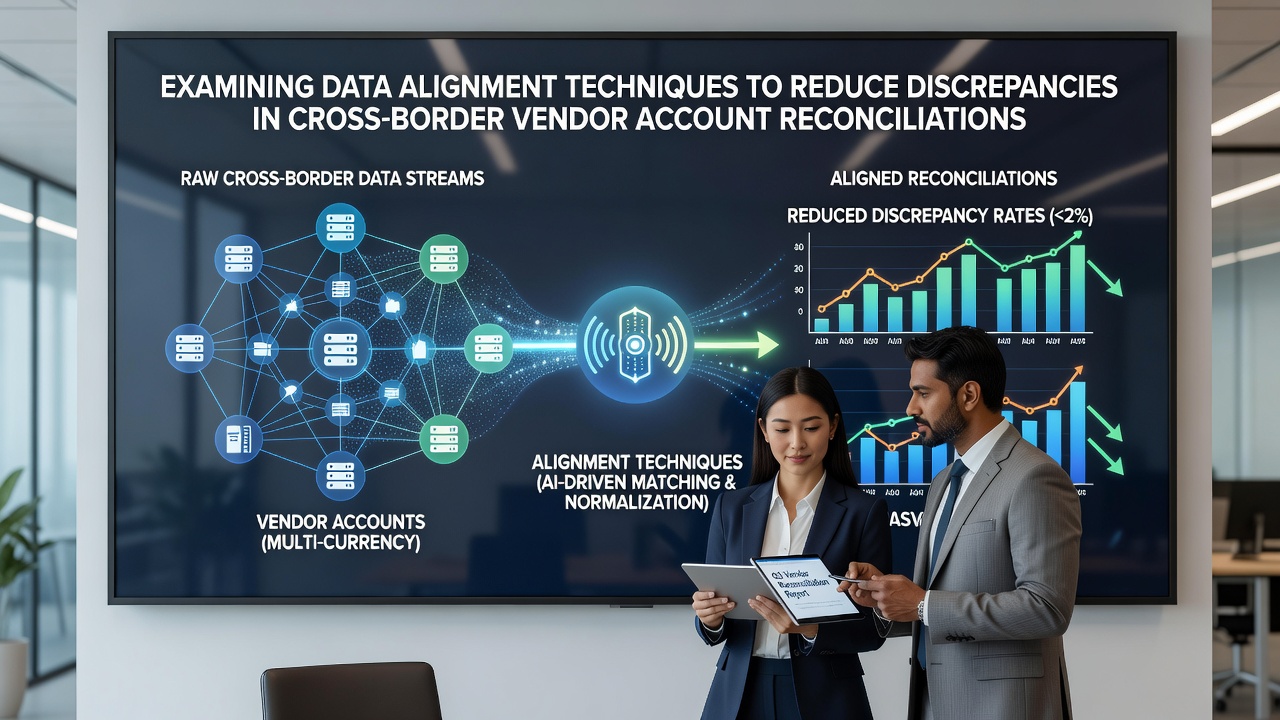
Cross-border vendor account reconciliations involve matching financial records between international parties where differences in currencies, regulatory frameworks, and data formats create persistent mismatches. Research from institutions tracking global trade shows that these discrepancies often stem from timing differences in transaction postings, varying tax calculations, and inconsistent identifier usage across systems. In July 2026 observers noted increased focus on alignment methods as new reporting requirements took effect in multiple regions, prompting vendors to adopt structured approaches that synchronize datasets before final settlements occur.
Core Sources of Discrepancies in International Reconciliations
Discrepancies arise when vendor ledgers record the same transaction under different exchange rates or when one party applies a fiscal period cutoff that another does not recognize. Data from the Bank for International Settlements indicates that currency conversion variances account for a significant share of mismatches in high-volume vendor accounts spanning multiple jurisdictions. Time zone gaps compound the issue because a transaction timestamped in one market may land in the prior or subsequent business day on the receiving end, while regulatory filings in one country may require additional fields absent from another nation's standard reports.
Observers note that vendor identification numbers sometimes fail to map cleanly across borders when local tax authorities assign unique formats that lack direct equivalents elsewhere. These factors combine to produce unmatched line items that require manual intervention unless alignment protocols intervene early in the data pipeline.
Standardization Protocols That Improve Record Matching
Adoption of common data schemas such as ISO 20022 enables vendors to transmit structured messages containing consistent element tags for amounts, dates, and counterparties. When both parties apply the same schema, automated comparison tools can flag only true variances rather than format-induced noise. Studies conducted by research groups in Canada and Australia demonstrate that organizations implementing ISO 20022 across their vendor networks reduced unmatched entries by measurable percentages within the first reporting cycle after rollout.
Additional mapping layers translate local tax codes and account classifications into a shared reference table maintained by a neutral third party or consortium. This approach allows each jurisdiction to retain its native reporting requirements while providing a unified view for reconciliation purposes, and the process runs continuously rather than at period-end only.
Automated Matching Algorithms and Machine Learning Applications
Algorithms that apply fuzzy logic and probabilistic scoring compare fields even when minor spelling variations or rounding differences exist between records. These systems assign confidence scores to potential matches and route only low-confidence items to human reviewers. In one documented implementation, a European vendor consortium integrated machine learning models trained on historical reconciliation outcomes, allowing the software to learn which combinations of currency, date, and amount most reliably indicate the same underlying transaction.
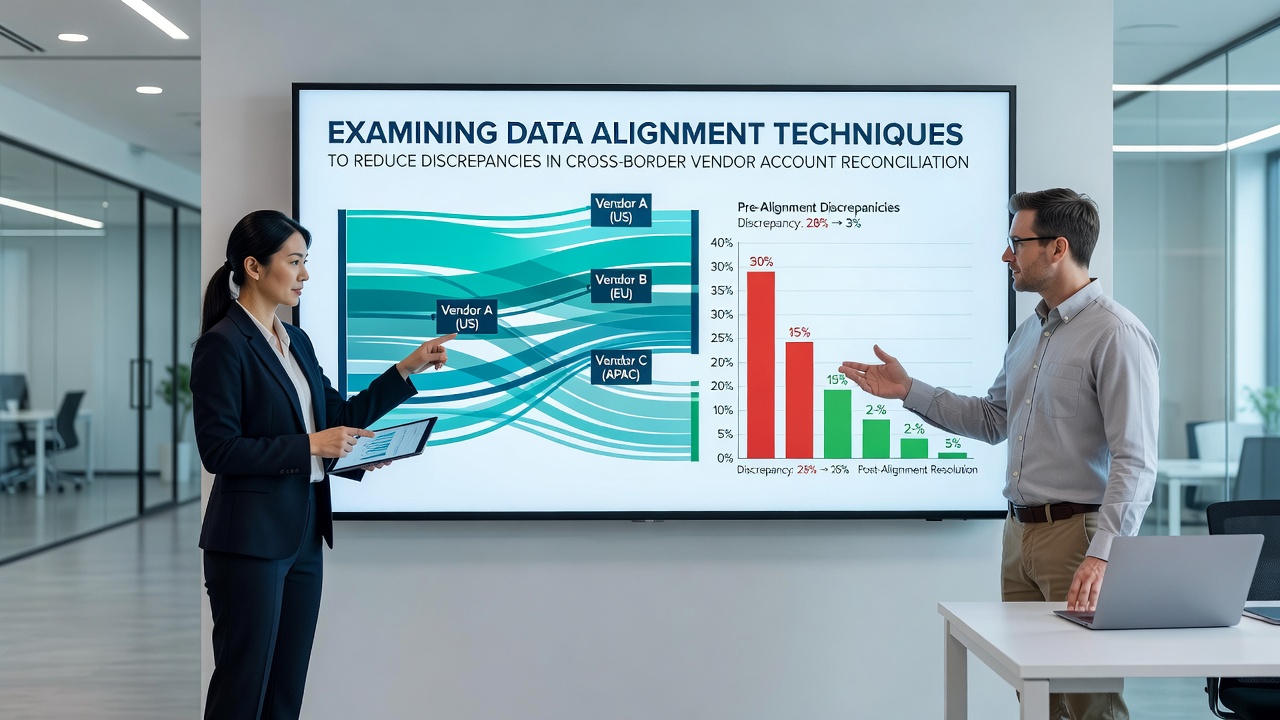
Continuous learning loops update model parameters as new discrepancy patterns emerge, and organizations report that accuracy improves over successive quarters. The approach proves particularly useful when vendors operate in markets where data quality varies widely, because the algorithm can weight more reliable sources more heavily during matching decisions.
Distributed Ledger Approaches for Shared Transaction Views
Some vendor networks have begun testing permissioned blockchain platforms that record each transaction once and make the entry visible to authorized parties in real time. Because every participant references the same immutable record, currency conversion and timing discrepancies diminish when the ledger itself stores both local and converted values along with standardized timestamps. A collaborative pilot involving vendors from Asia and North America showed that ledger-based alignment reduced the volume of disputed items reaching month-end close procedures.
Access controls ensure that proprietary pricing and volume details remain visible only to permitted counterparties, while the core transaction metadata stays synchronized across all nodes. Integration with existing enterprise resource planning systems occurs through standardized APIs that push and pull data without requiring wholesale replacement of legacy accounting platforms.
Implementation Considerations and Performance Metrics
Successful deployments begin with an audit of current data fields and identification of gaps that prevent direct matching. Organizations then establish governance committees that include representatives from each major jurisdiction to approve reference tables and exception-handling rules. Performance tracking focuses on metrics such as percentage of items auto-matched, average days to resolve exceptions, and reduction in manual adjustment entries posted to the general ledger.
Figures released by academic researchers studying multinational supply chains reveal that firms maintaining centralized alignment rules across subsidiaries achieve faster period-end closes compared with those relying on decentralized, manual processes. Regular testing against synthetic datasets helps confirm that new transaction types introduced by regulatory changes continue to map correctly under existing protocols.
Conclusion
Data alignment techniques centered on standardization, algorithmic matching, and shared ledgers provide structured pathways for reducing discrepancies in cross-border vendor account reconciliations. As reporting obligations evolve in July 2026 and beyond, organizations that embed these methods into daily operations position themselves to handle growing transaction volumes with fewer unmatched items. Continued refinement of reference data and model training ensures that alignment processes remain effective even as new markets and regulatory environments enter the network.