Ledger Matching Strategies That Reduce Errors in Mixed-Method Vendor Payouts Across Regions
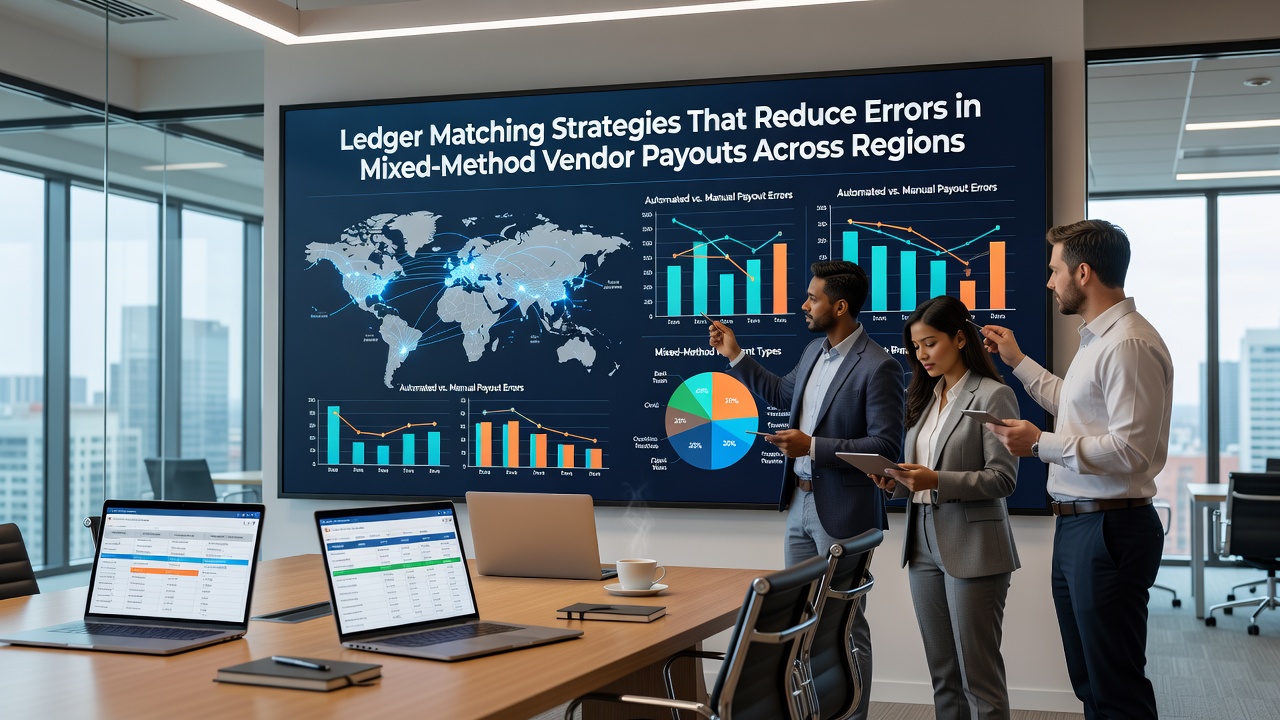
Businesses handling vendor payouts through cards, bank transfers, and digital wallets encounter frequent mismatches when operations span multiple regions, and ledger matching strategies address these issues by aligning transaction records at scale. Payment flows in July 2026 reflect increased adoption of automated tools that cross-check entries from diverse sources while accounting for currency conversions and regulatory variations.
Core Components of Effective Ledger Matching
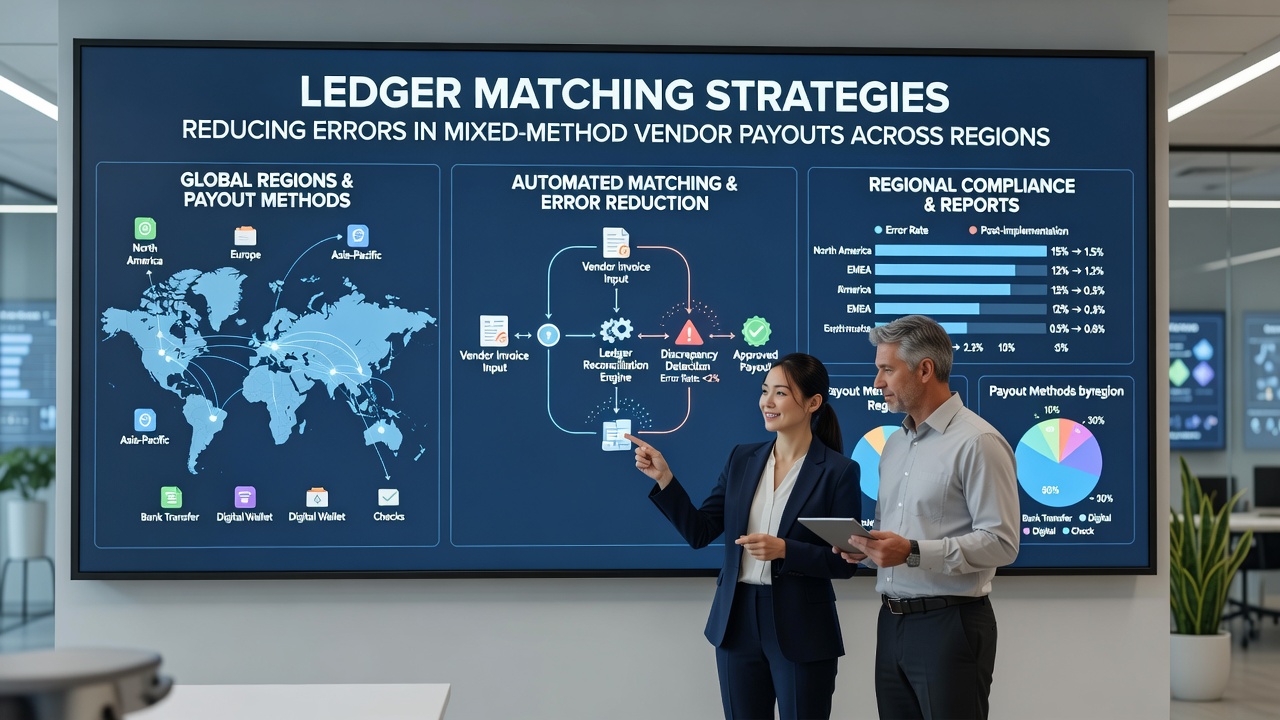
Automated reconciliation systems scan incoming data streams from credit networks, electronic transfers, and mobile applications, then flag discrepancies based on predefined rules for amount, date, and identifier fields. These platforms integrate regional tax codes and reporting requirements so that payouts processed in one jurisdiction align with records generated elsewhere, and observers note that such integration cuts manual review time substantially when transaction volumes rise.
Three-way matching techniques compare vendor invoices against payment authorizations and bank confirmations before final settlement occurs, while algorithms adjust for timing differences caused by weekend processing cycles or holiday schedules in different time zones. Data from industry reports shows that organizations implementing these layered checks experience fewer unmatched entries over quarterly periods compared with single-method verification approaches.
Handling Regional Variations in Payment Methods
Regional differences in banking hours, currency controls, and wallet provider protocols create additional layers of complexity during reconciliation, yet structured matching protocols map each method to standardized ledger codes that remain consistent across borders. Payment processors operating in the European Union and Asia-Pacific markets apply these mappings to reduce errors stemming from format variations in IBAN versus local routing numbers, and studies from the Bank for International Settlements highlight measurable improvements in settlement accuracy when such mappings receive regular updates.
Multi-currency ledgers incorporate real-time exchange rate snapshots at the moment of each payout, which prevents drift between expected and actual amounts recorded in central accounts. Teams responsible for vendor management often run exception reports that isolate entries affected by rate fluctuations, allowing targeted corrections without disrupting the broader reconciliation cycle.
Technology Tools Supporting Error Reduction
Machine learning models trained on historical transaction datasets identify patterns that precede common mismatches, such as repeated vendor identifier typos or slight variations in merchant name spellings across platforms. These models flag potential issues for human review while permitting high-confidence matches to proceed automatically, and research conducted at academic institutions demonstrates consistent gains in processing speed without corresponding increases in error rates.
Cloud-based ledger platforms enable simultaneous access for finance teams located in separate regions, which supports collaborative resolution of flagged items during overlapping business hours. Audit trails generated by these systems record every adjustment, creating traceable documentation that satisfies compliance requirements from bodies like the Australian Securities and Investments Commission when cross-border activity intensifies.
Implementation Steps for Organizations
Initial setup begins with a comprehensive audit of existing payout channels and identification of the most frequent mismatch sources, followed by configuration of matching rules tailored to each method and region. Pilot programs typically run alongside legacy processes for one or two reporting cycles, allowing teams to measure reductions in unresolved items before full migration occurs.
Ongoing monitoring involves scheduled reviews of exception rates and updates to rule sets whenever new payment methods or regulatory changes appear. Organizations that maintain these review cadences report steadier accuracy metrics even as transaction complexity grows through expanded vendor networks.
Conclusion
Ledger matching strategies continue to evolve alongside payment technology, offering structured approaches that align records generated through mixed methods and across geographic boundaries. Implementation data indicates that consistent application of automated checks, regional mapping protocols, and machine learning assistance produces measurable reductions in reconciliation errors while supporting compliance across jurisdictions.