Navigating Cross-Border Recurring Charges: Wallet Integrations and Gateway Protections for Merchants
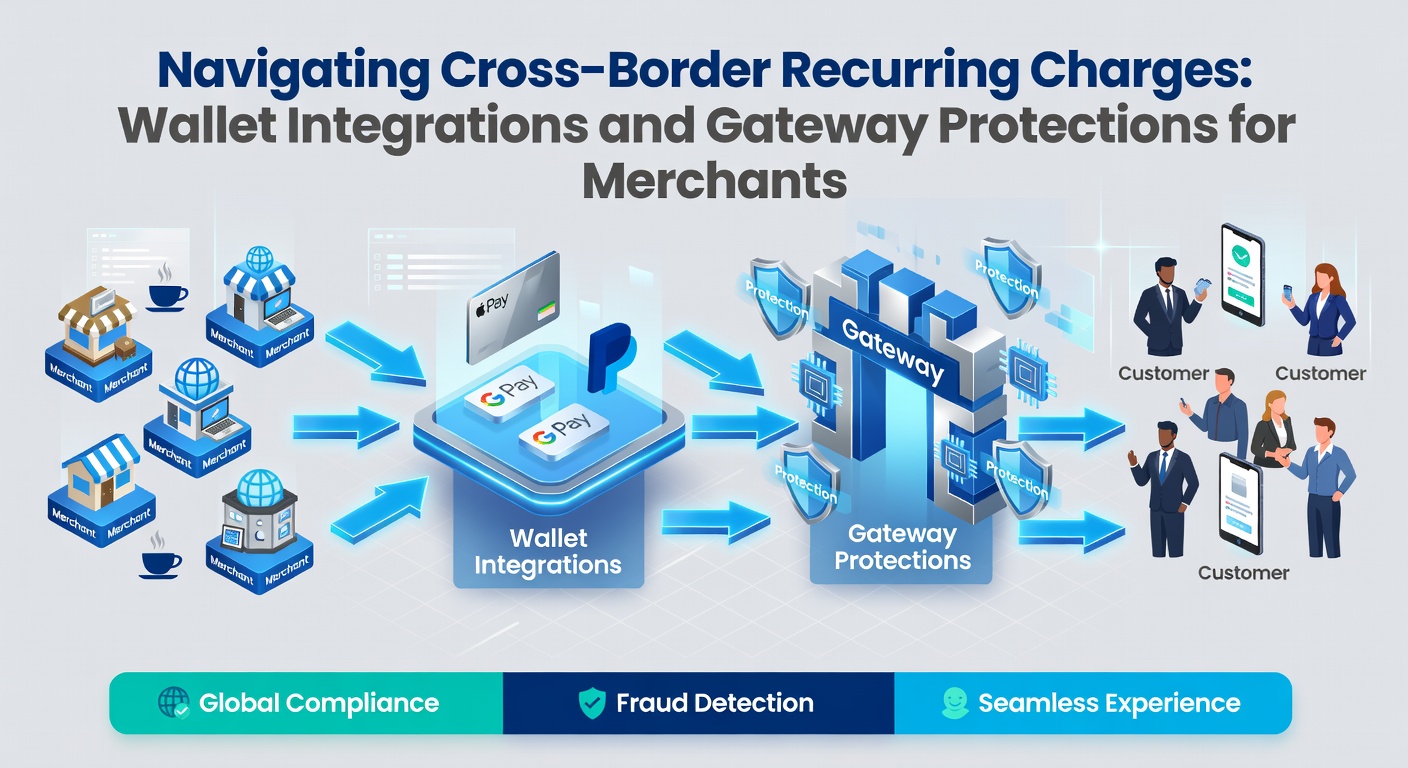 Merchants who handle international subscriptions must coordinate multiple systems to keep recurring charges flowing smoothly across currencies and regulatory zones. Digital wallets now serve as entry points for many of those payments, while payment gateways supply the technical layers that reduce declines and maintain compliance. Wallet providers such as Apple Pay and Google Pay have expanded their recurring billing features, allowing merchants to store tokens instead of raw card data. This token-based approach lets a subscription renew without requiring the customer to re-enter details each cycle. Yet the same wallets operate under different rules depending on the country where the card was issued, so merchants must map each integration to local authorization requirements before launch.
Wallet Integration Patterns Across Regions
Payment networks report that tokenization adoption for recurring cross-border transactions rose steadily through 2025. In practice, a merchant integrates once with a wallet provider, receives a device-specific token, and then routes subsequent charges through that token via the chosen gateway. The process reduces exposure to card updates, but it demands precise mapping of billing descriptors and merchant category codes so issuers recognize the charge as expected rather than suspicious.
Regional differences appear quickly. European issuers following PSD2 strong customer authentication rules may request additional confirmation on the first charge, while issuers in parts of Asia often accept recurring tokens after the initial authorization without further prompts. Merchants who tested these flows in early 2026 noted that pre-emptive prompts sent through the wallet app cut involuntary churn by clarifying upcoming debits to customers in advance.
Gateway Controls That Stabilize Recurring Volume
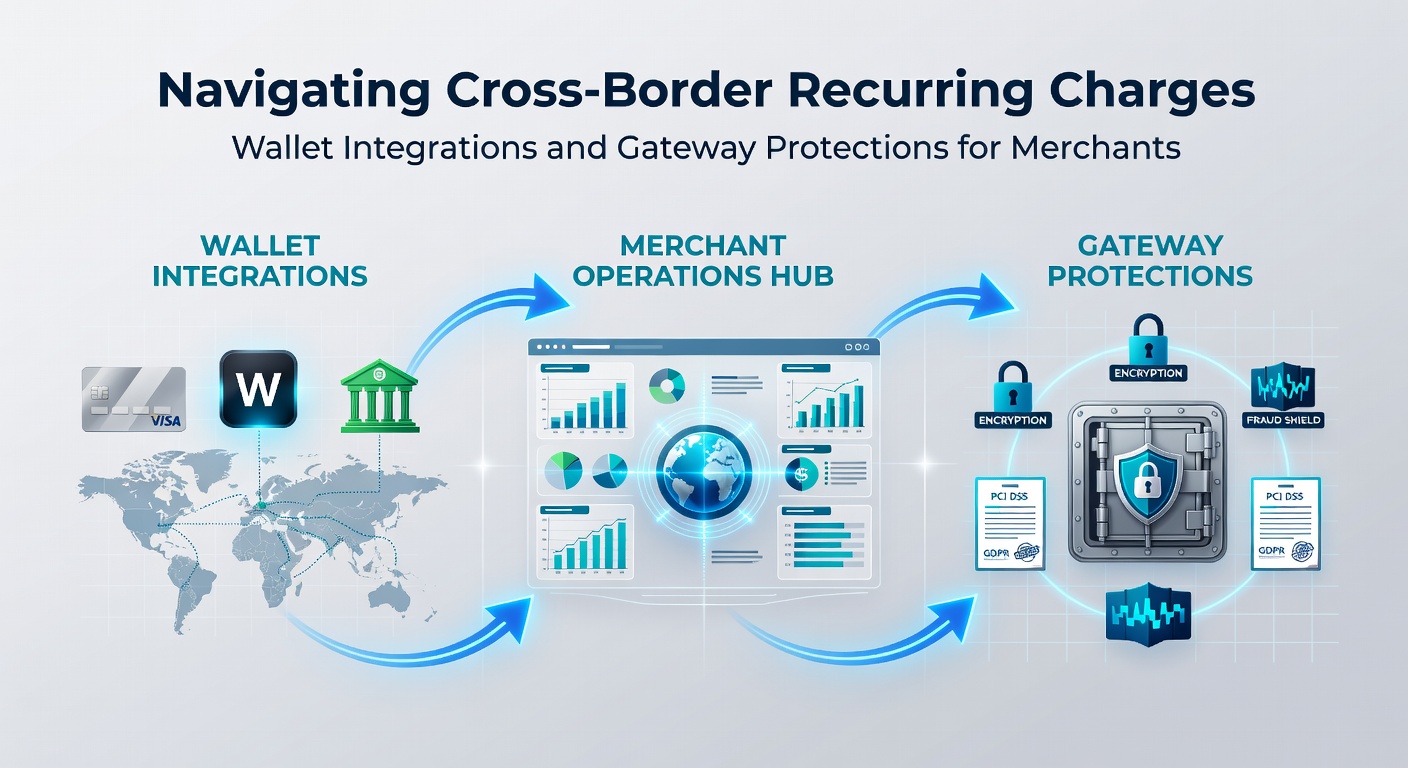
Modern gateways embed several protective mechanisms that merchants activate when recurring volume spans borders. Velocity checks flag unusual spikes in charge attempts from a single account, while dynamic currency conversion tools present the customer with the amount in their home currency before the wallet token is charged. These features sit inside the gateway rather than the wallet layer, giving merchants a single control point even when multiple wallet types feed into the same subscription system.
Token lifecycle management forms another core protection. When a customer updates card details inside a wallet, the gateway receives a notification and updates the stored credential automatically. This update process prevents the common failure mode where an old token lingers after the underlying card expires. Data from the Federal Reserve Bank of New York shows that merchants using automated token updates experienced fewer failed renewals during the first quarter of 2026 compared with those handling updates manually.
Compliance Layers That Vary by Market
Cross-border recurring charges trigger reporting obligations that differ sharply between jurisdictions. Australian merchants must align with ASIC ePayments Code requirements for disclosure of subscription terms, while Canadian operators follow the Prepaid Payment Products Regulations when wallet balances are involved. These rules affect how billing schedules appear inside the wallet interface and how cancellation rights are communicated to customers.
Gateways simplify adherence by offering region-specific rule sets that merchants toggle during onboarding. A single configuration dashboard can apply European SCA exemptions for low-risk recurring merchants while enforcing stricter verification for higher-risk categories. Observers note that this centralized approach reduces the need for separate technical builds per market.
Operational Adjustments Observed in Mid-2026
By May 2026 several gateways had introduced scheduled reauthorization windows that align with common billing cycles in target regions. Instead of attempting a charge on the exact renewal date, merchants could shift the attempt by one or two days to avoid weekend or holiday processing gaps in certain countries. Early adopters reported smoother cash-flow timing once these windows were activated.
Wallet providers simultaneously expanded support for multi-currency tokens. A customer whose card is denominated in euros can now authorize a subscription charged in Singapore dollars without forcing an intermediate conversion at the wallet level. The gateway still performs the final settlement conversion, yet the authorization step benefits from clearer amount presentation to the cardholder.
Conclusion
Merchants who combine wallet token integrations with gateway-level controls gain measurable stability when managing recurring charges that cross borders. The combination reduces failed renewals, supports regional compliance without duplicated code, and adapts to the regulatory shifts that continue through 2026. Continued monitoring of issuer behavior and wallet policy updates remains essential for maintaining authorization rates over time.