Regulatory Alignment Challenges in Multi-Platform Recurring Revenue Systems for Niche Market Operators
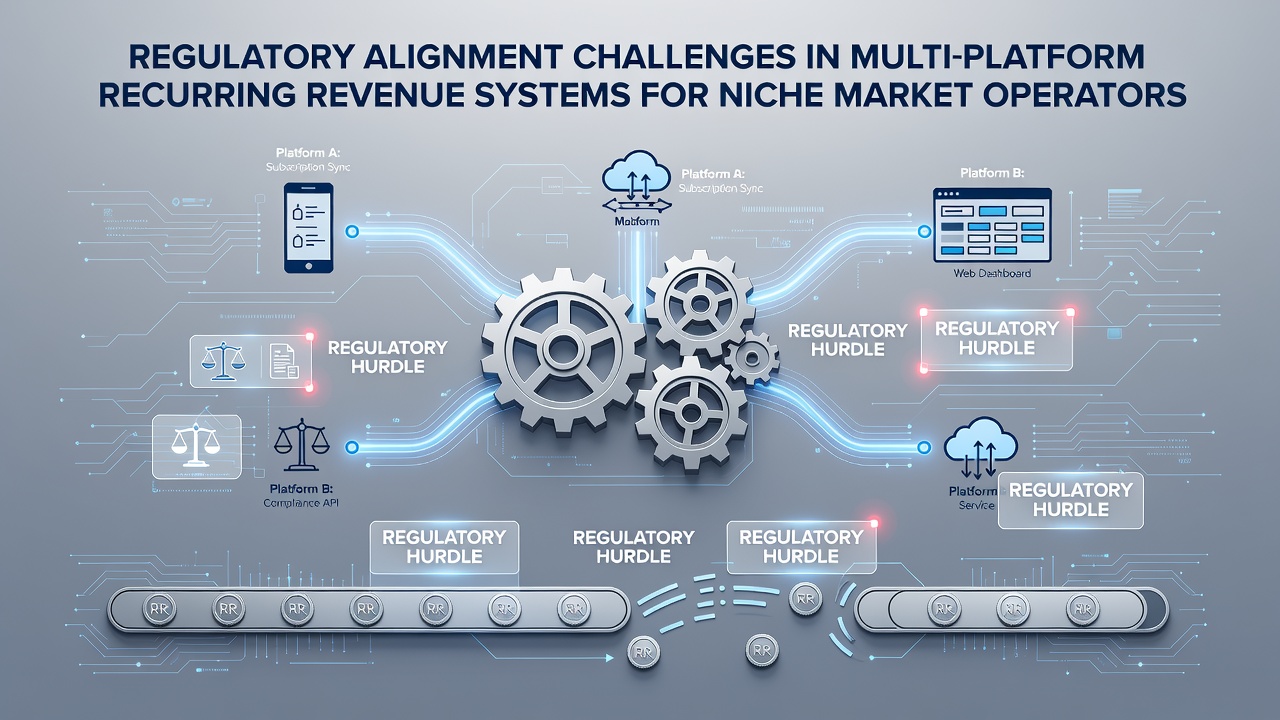
Operators in niche markets face distinct pressures when managing recurring revenue across multiple platforms because each jurisdiction imposes its own rules on billing cycles, data handling, and consumer notifications. These systems often span mobile app stores, web portals, and third-party marketplaces, and the resulting patchwork of requirements creates ongoing coordination demands. Research from international trade bodies shows that misalignment frequently surfaces in areas such as automatic renewal disclosures, refund timelines, and cross-border tax filings.
Data Privacy Obligations Across Jurisdictions
Privacy statutes require operators to secure explicit consent for storing payment details and usage data that support recurring charges. In the European Union, rules under the General Data Protection Regulation mandate granular consent mechanisms and data portability options that must function identically whether a subscriber pays through an app store or a direct website. Meanwhile, several U.S. states enforce separate breach notification periods and data minimization standards that differ from one another. Observers note that niche operators handling health-related or educational content encounter additional sector-specific overlays that further complicate platform synchronization.
Operators who maintain separate databases for each sales channel often discover that audit trails fail to align when regulators request unified records. One study of small software vendors revealed that reconciling consent logs across Apple, Google, and proprietary web systems consumed substantial compliance resources each quarter. Figures released by the European Commission indicate that cross-border data transfer cases involving recurring services rose steadily through 2025, prompting many firms to adopt centralized consent platforms.
Consumer Protection Rules and Renewal Disclosures
Automatic renewal statutes vary sharply by region, and operators must embed region-specific prompts without disrupting the checkout flow on every platform. California and several other states require clear opt-in language plus reminder emails at defined intervals before each billing cycle, whereas certain Canadian provinces emphasize cooling-off periods that extend after the first charge. Platform operators such as Apple and Google maintain their own renewal notice policies that sometimes conflict with local statutes, forcing niche vendors to layer additional messaging on top of native interfaces.
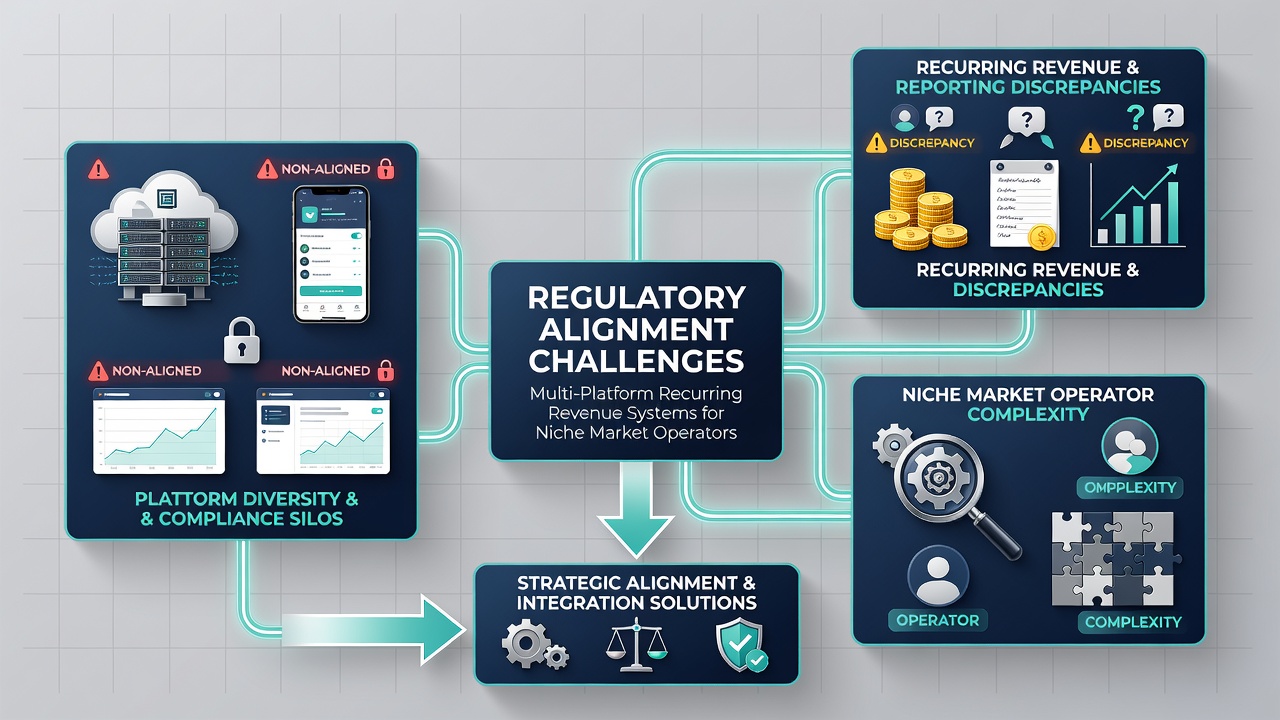
Those who studied enforcement actions report that fines have been issued when renewal terms displayed in one marketplace omitted required phrasing mandated elsewhere. The Federal Trade Commission maintains guidance that lists precise disclosure elements for negative-option offers, and operators serving multiple U.S. states must verify that each channel meets the strictest applicable standard. As of July 2026, several jurisdictions plan to introduce standardized digital templates for renewal notices, which may reduce some duplication yet still leave room for platform-specific formatting constraints.
Tax Reporting and Cross-Border Remittance
Recurring revenue streams trigger multiple layers of tax collection and remittance that rarely match across platforms. Value-added tax rules in the European Union require sellers to determine the correct rate based on customer location at the moment of each charge, while U.S. sales tax obligations hinge on economic nexus thresholds that update periodically. Niche operators using more than one billing engine frequently encounter mismatches between the tax data exported by app stores and the records generated by their own invoicing systems.
Reports compiled by the OECD highlight that automated exchange of tax information between countries now covers a growing share of digital service providers, increasing the need for precise subscriber-location tracking. One case involving an educational content provider showed that discrepancies in reported revenue across platforms triggered extended audits lasting more than eighteen months. These examples illustrate why many operators now invest in reconciliation tools that map each jurisdiction's filing deadlines onto a single calendar.
Platform Rulebooks and Overlapping Enforcement
App stores enforce their own subscription guidelines that sit alongside government regulations, and updates to store policies can occur independently of legislative calendars. When an app store revises its cancellation window or refund window, operators must adjust backend logic without breaking existing compliance in other regions. Industry associations tracking these changes document instances where a single policy shift affected thousands of niche vendors simultaneously, requiring rapid code and documentation updates across web, iOS, and Android environments.
Those responsible for compliance often maintain living matrices that list every relevant rule, its effective date, and the platforms it touches. Such matrices grow lengthy because each new market entry adds another set of consumer-protection and tax requirements. Data from regulatory monitoring services show that the average number of active jurisdictions per niche operator increased from four to seven between 2023 and 2025, underscoring the expanding coordination burden.
Conclusion
Alignment of regulatory demands across multiple recurring-revenue platforms remains an operational necessity rather than an optional enhancement for niche market operators. Successful coordination depends on continuous monitoring of statutory changes, precise mapping of consent and disclosure workflows, and reliable tax data pipelines that reconcile outputs from every sales channel. As additional jurisdictions refine their rules and platforms adjust their technical specifications, operators who maintain adaptable compliance architectures position themselves to meet obligations without repeated system overhauls.