Settlement Timelines and Cash Flow Alignment Across Varied Transaction Channels for Regional Retail Cooperatives
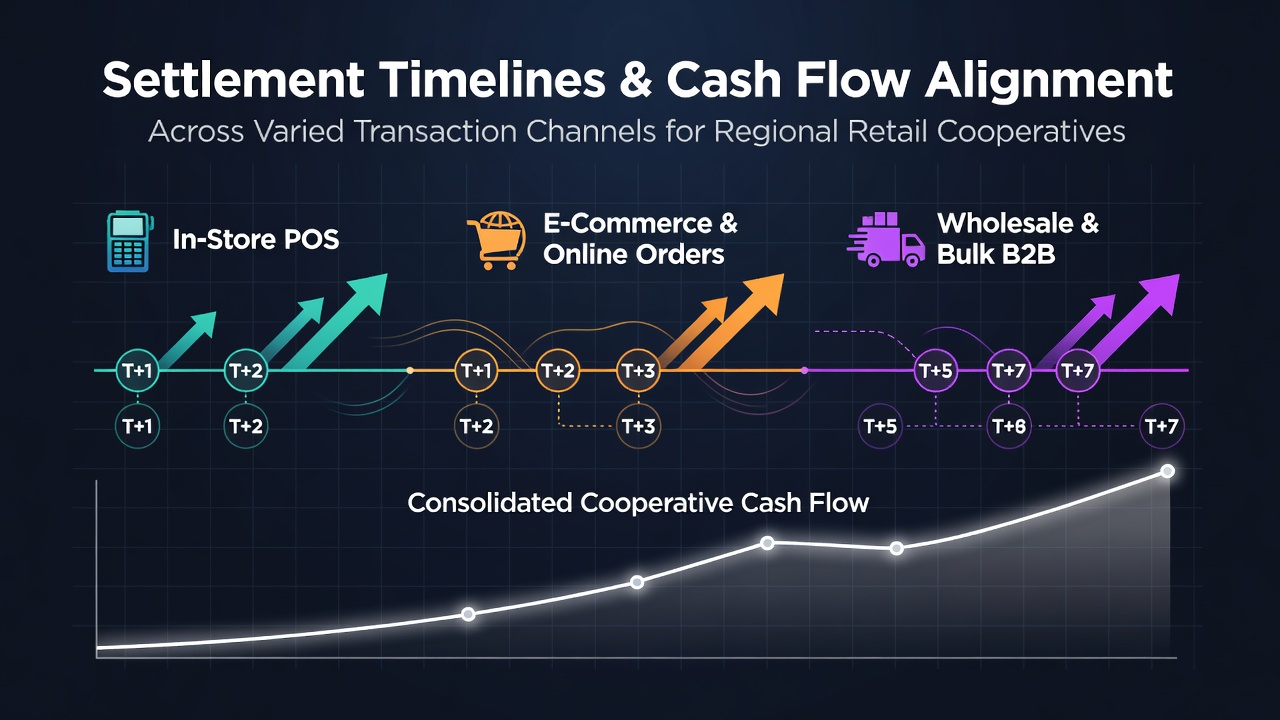
Regional retail cooperatives manage settlement timelines across card networks, electronic transfers, and mobile platforms while maintaining steady cash flows for inventory and operations, and data from payment studies shows these entities often process mixed transaction volumes that require precise coordination between incoming funds and outgoing obligations.
Transaction Channels in Cooperative Operations
Retail cooperatives in rural and suburban areas typically handle point-of-sale card payments through debit and credit networks, automated clearing house transfers from member accounts, and emerging digital wallet options that route funds from consumer devices directly into cooperative ledgers, while researchers note that each channel carries distinct processing windows that affect daily liquidity planning.
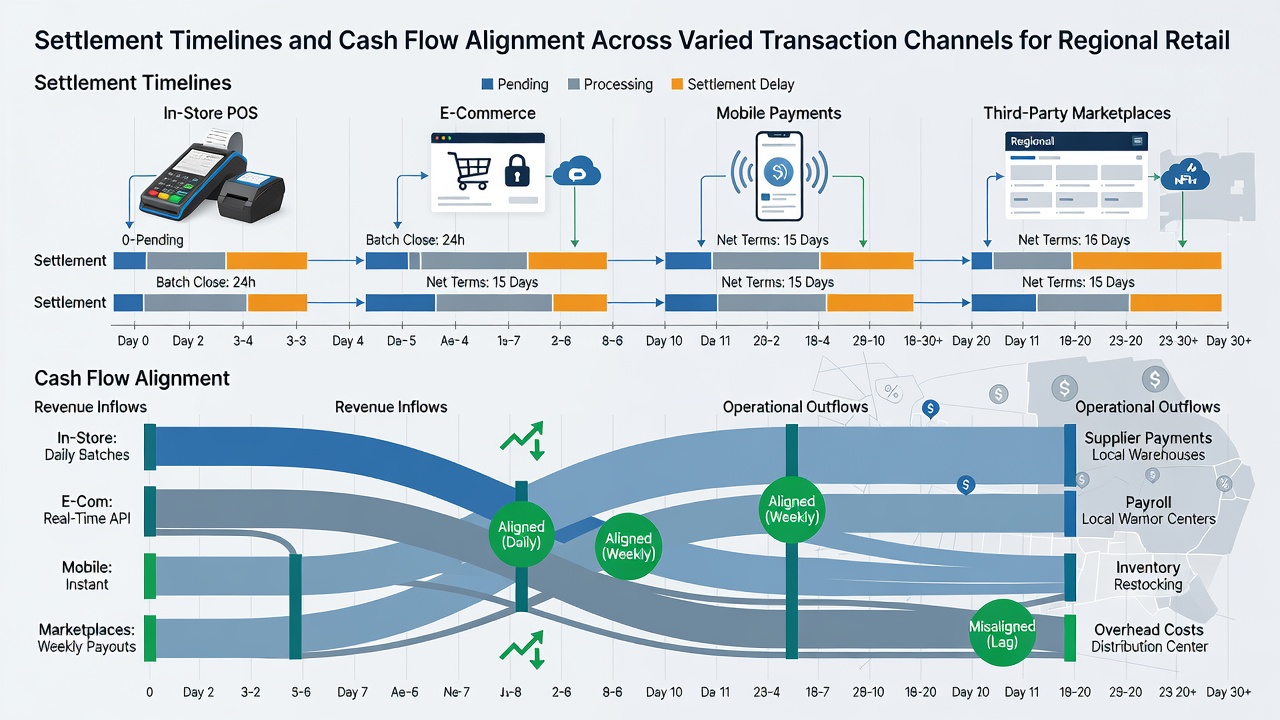
Card settlements usually clear within one to three business days depending on the processor agreement, whereas bank transfers can extend to five days in cross-regional setups, and mobile channels often settle overnight yet introduce additional verification steps that extend final availability by an extra cycle in some jurisdictions.
Aligning Settlement Schedules with Operational Needs
Cooperative managers track settlement batches by channel to forecast available funds for supplier payments and payroll cycles, and studies from payment system analyses indicate that misalignment between settlement arrivals and expense due dates can create temporary shortfalls even when overall revenue remains stable.
One approach involves staggering supplier orders to coincide with known settlement peaks from high-volume card days, while another relies on short-term credit lines that bridge gaps until electronic transfers finalize, according to figures from the Federal Reserve payment studies.
Regional Variations and Processing Differences
Cooperatives operating across state or provincial lines encounter varied regulatory timelines that influence how quickly funds become usable, and observers note that entities in the Midwest often see faster card settlements than those in coastal regions where additional compliance checks apply during peak seasons.
Data matching between transaction records and bank statements becomes essential in these multi-channel environments because discrepancies in timing can compound across hundreds of daily sales entries, and evidence from industry reports suggests automated reconciliation tools reduce such errors by aligning timestamps at the point of capture.
Tools and Protocols Supporting Cash Flow Stability
Many cooperatives adopt integrated platforms that consolidate settlement data from all channels into unified dashboards, allowing finance teams to project net positions days ahead rather than reacting after funds arrive, while those who have implemented these systems report fewer instances of overdraft triggers during slower settlement periods.
Protocols for pre-authorization holds on card transactions further support planning because they provide early visibility into expected inflows before actual settlement occurs, and similar advance notifications from mobile providers help cooperatives adjust disbursement schedules accordingly.
Developments Expected by August 2026
Industry groups anticipate updated interoperability standards for cross-channel reporting that could shorten effective settlement windows for cooperatives handling mixed regional volumes, and preliminary guidelines under review at various central banks outline requirements for real-time status updates that would reduce uncertainty in cash flow modeling.
Training programs for cooperative staff on these emerging protocols are already underway in several networks, preparing teams to integrate new data feeds without disrupting existing reconciliation routines.
Conclusion
Effective management of settlement timelines across transaction channels enables regional retail cooperatives to maintain consistent cash availability despite the inherent delays built into card, transfer, and mobile systems, and continued refinement of alignment practices supports operational continuity as volumes and channel diversity increase.