Tracing Interoperability Challenges Between Biometric Verification Layers and Recurring Authorization Protocols Across Multi-Jurisdictional Vendor Networks
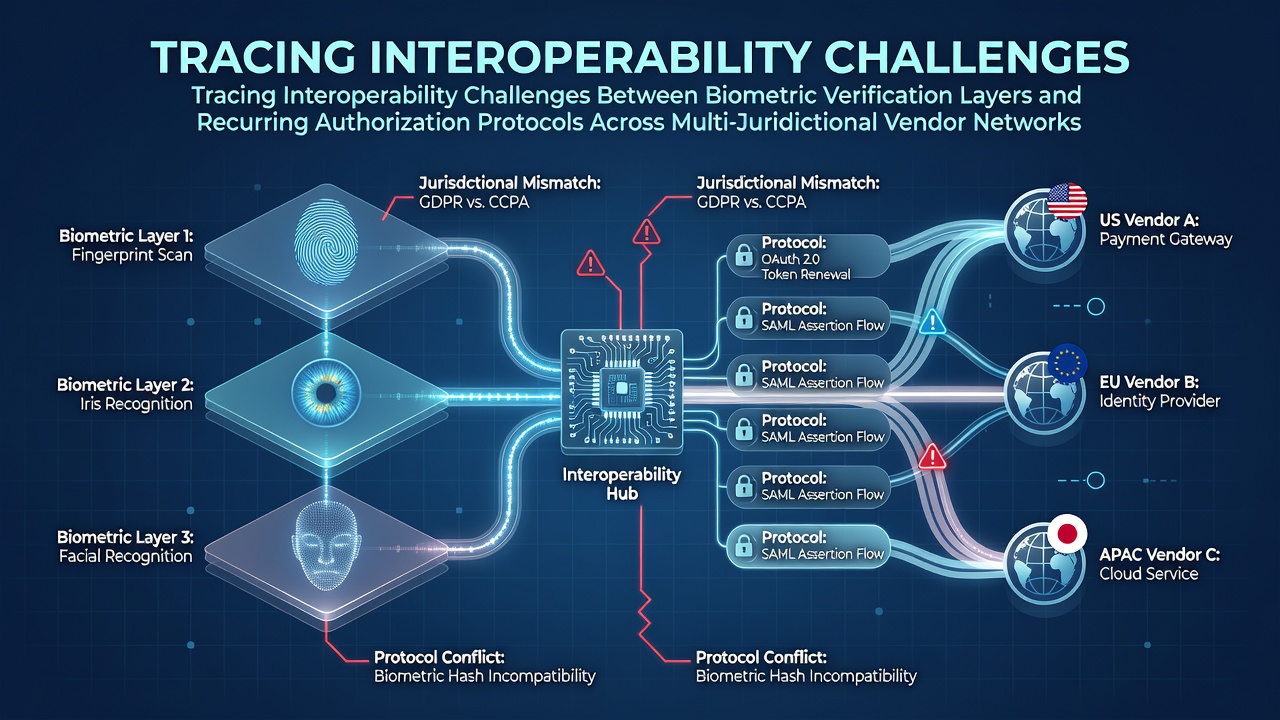
Biometric verification layers now integrate with recurring authorization protocols in payment ecosystems that span multiple countries and vendor platforms, yet mismatches in data formats, consent mechanisms, and security standards create persistent friction points. Research indicates that these layers rely on fingerprint, facial recognition, and iris scans to confirm user identity, while recurring protocols handle scheduled charges through tokenization and dynamic authentication sequences. According to data from the National Institute of Standards and Technology, biometric templates require specific encoding standards that do not always align with authorization message formats used by card networks and digital transfer systems operating across borders.
Core Technical Mismatches in Verification and Authorization
One study revealed that biometric systems often store hashed templates locally or in regional clouds, whereas recurring authorization protocols demand real-time validation tokens that travel through vendor gateways in different jurisdictions. Experts have observed format discrepancies where ISO/IEC 19794 biometric data structures conflict with EMVCo specifications for tokenized recurring payments, leading to rejected transactions when vendors attempt to link the two. Those who've examined these sequences note that a facial scan captured under one vendor's API may fail to trigger an authorization renewal under another provider's protocol because the metadata fields for liveness detection do not map cleanly.
Researchers discovered additional hurdles when consent flags attached to biometric captures must comply with varying privacy rules, such as those enforced by Canada's Office of the Privacy Commissioner alongside Australian digital identity frameworks. These rules affect how authorization protocols can reuse biometric confirmations for subsequent charges without fresh user input. Data shows that in June 2026 several jurisdictions plan to enforce updated template retention limits, which will force vendors to rebuild their synchronization layers or risk compliance gaps during recurring cycles.
Regulatory Divergence Across Jurisdictions
Multi-jurisdictional vendor networks encounter layered requirements that alter how biometric verification feeds into authorization flows. The European Data Protection Board guidelines, for instance, emphasize explicit purpose limitation for biometric data, while parallel rules in Singapore's Personal Data Protection Commission focus on cross-border transfer safeguards. Observers note that a vendor operating in both regions must maintain separate consent ledgers, and these ledgers frequently fail to update in sync with recurring authorization requests that originate from a third-country acquirer.
Figures reveal that transaction failure rates climb when biometric timestamps do not satisfy the freshness thresholds embedded in authorization protocols across these borders. People who've tracked vendor implementations report that reconciliation processes then require manual intervention, extending settlement times and increasing operational overhead for merchants handling international subscriptions.
Vendor-Specific Integration Barriers
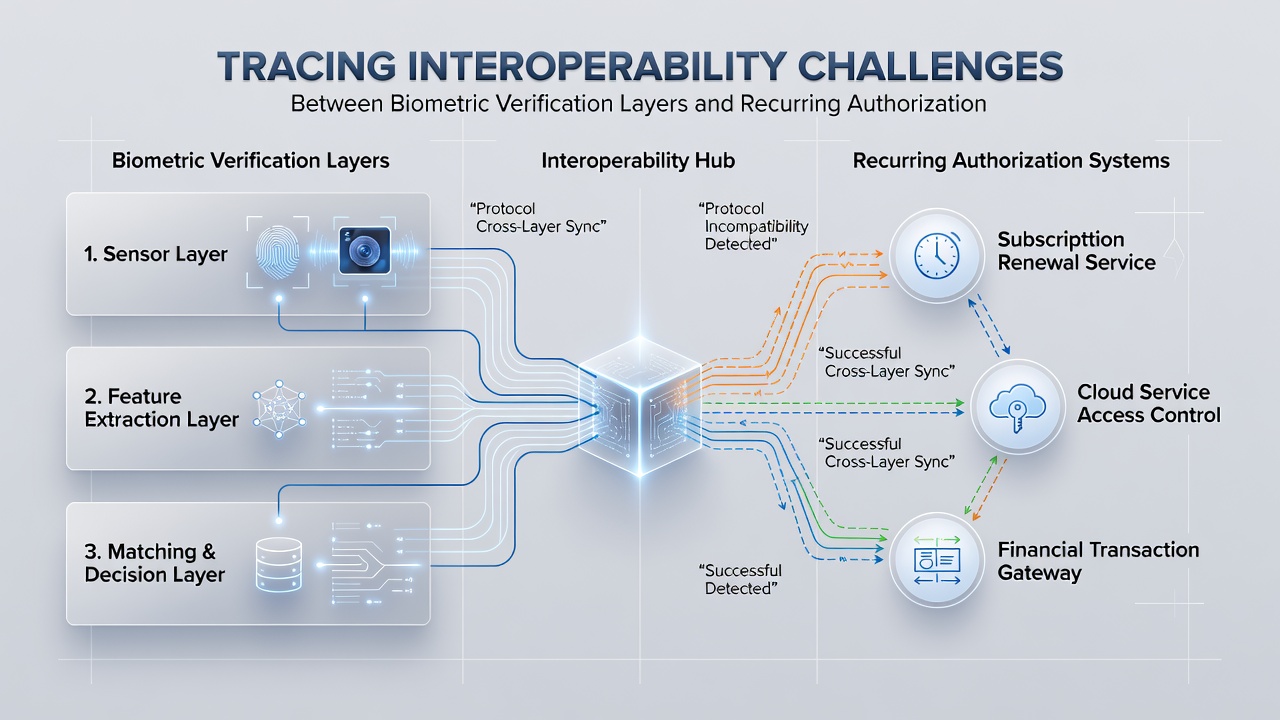
Vendor platforms each maintain proprietary extensions on top of shared standards, which compounds interoperability strain. One case where experts mapped these extensions found that a major gateway's biometric enrollment endpoint omitted fields required by a regional bank's authorization API for recurring mandates. The resulting mismatch forced downstream systems to drop the biometric reference and fall back to static credentials, undermining the security gains originally intended.
Industry reports from the OECD highlight how such vendor differences scale when networks incorporate both global processors and local acquirers. Those who've studied high-volume environments note that API version drift between biometric providers and authorization hosts creates silent failures, where transactions appear authorized yet lack the biometric audit trail needed for dispute resolution. In June 2026 several vendor consortia intend to publish unified mapping schemas, yet adoption timelines remain staggered across regions.
Security and Data Integrity Considerations
Security meshes designed to protect recurring flows must accommodate biometric template revocation lists that propagate at different speeds than authorization blocklists. Research indicates that a compromised biometric record in one jurisdiction may still allow an authorization request to proceed through a vendor in another region if the revocation signal arrives after the token has already been issued. This timing gap widens when networks cross multiple time zones and regulatory reporting cycles.
Academic analyses from institutions tracking digital payment infrastructure emphasize that encryption key rotation schedules for biometric data rarely synchronize with those used for recurring authorization tokens. The result is periodic windows where verification succeeds but the subsequent authorization layer cannot validate the integrity of the linked credential. Vendors addressing these windows have begun deploying intermediate translation services, though these add latency and introduce new single points of failure.
Emerging Coordination Efforts
Coordination bodies have started publishing reference architectures that separate biometric verification from authorization logic while preserving audit linkages. According to documentation released by Standards Australia, these architectures rely on standardized event logs that capture both the biometric match score and the authorization sequence identifier in a single immutable record. Early adopters report that such logs reduce reconciliation discrepancies during cross-border audits, yet implementation requires upgrades to legacy gateway software still prevalent in many vendor networks.
What's significant is how these efforts intersect with broader digital identity initiatives that several governments plan to expand by June 2026. The alignment of biometric standards with recurring payment protocols could then occur through shared trust frameworks rather than bilateral vendor agreements. Evidence suggests that networks already piloting these frameworks experience fewer protocol rejections when biometric confirmations cross jurisdictional boundaries.
Conclusion
Interoperability between biometric verification layers and recurring authorization protocols continues to hinge on consistent data mapping, synchronized consent mechanisms, and aligned security timelines across vendor ecosystems. As jurisdictions update retention and transfer rules in 2026, vendors face pressure to adopt translation layers and unified logging that bridge current gaps. Research from multiple regulatory and standards bodies indicates that progress depends on coordinated schema releases rather than isolated platform updates, with measurable reductions in transaction friction already visible in networks that have implemented shared reference architectures.